Introduction:
Analog drum machines have long been revered for their unique sound and enjoyable interface. However, with advancements in technology, it is now possible to recreate the essence of analog drum machines in a digital format and to enable the cultural heritage to open the eyes of a new generation to the unique creations of the past. In this article, we will explore the design creation process of replicating an analog drum machine in a digital environment, with a focus on the UI and UX design(design of VST plugin and iOS AUV3 app) processes that ensure an intuitive and delightful user experience.
Research and Understanding:
The first step in the design creation process was thorough research and understanding of the analog drum machine interface. We bought a rare Ukrainian preset drum machine – Pulsar to comprehend their visual aesthetics, interaction patterns, and sound generation principles. Simultaneously with that, we analyzed the digital interfaces of other drum machines(both audio plugins and iOS music making apps) to identify best practices, trends, and user expectations in the niches of digital music production and audio plugin development.
Conceptualization and Wireframing:
Once the research phase is complete we defined the visual parts of the analog hardware that will be fully implemented in the product and highlighted those sections and additional modules that can be improved from the point of view of additional functionality. Wireframing helped us in identifying potential usability issues and refining the design concept.
Visual Design and Branding:
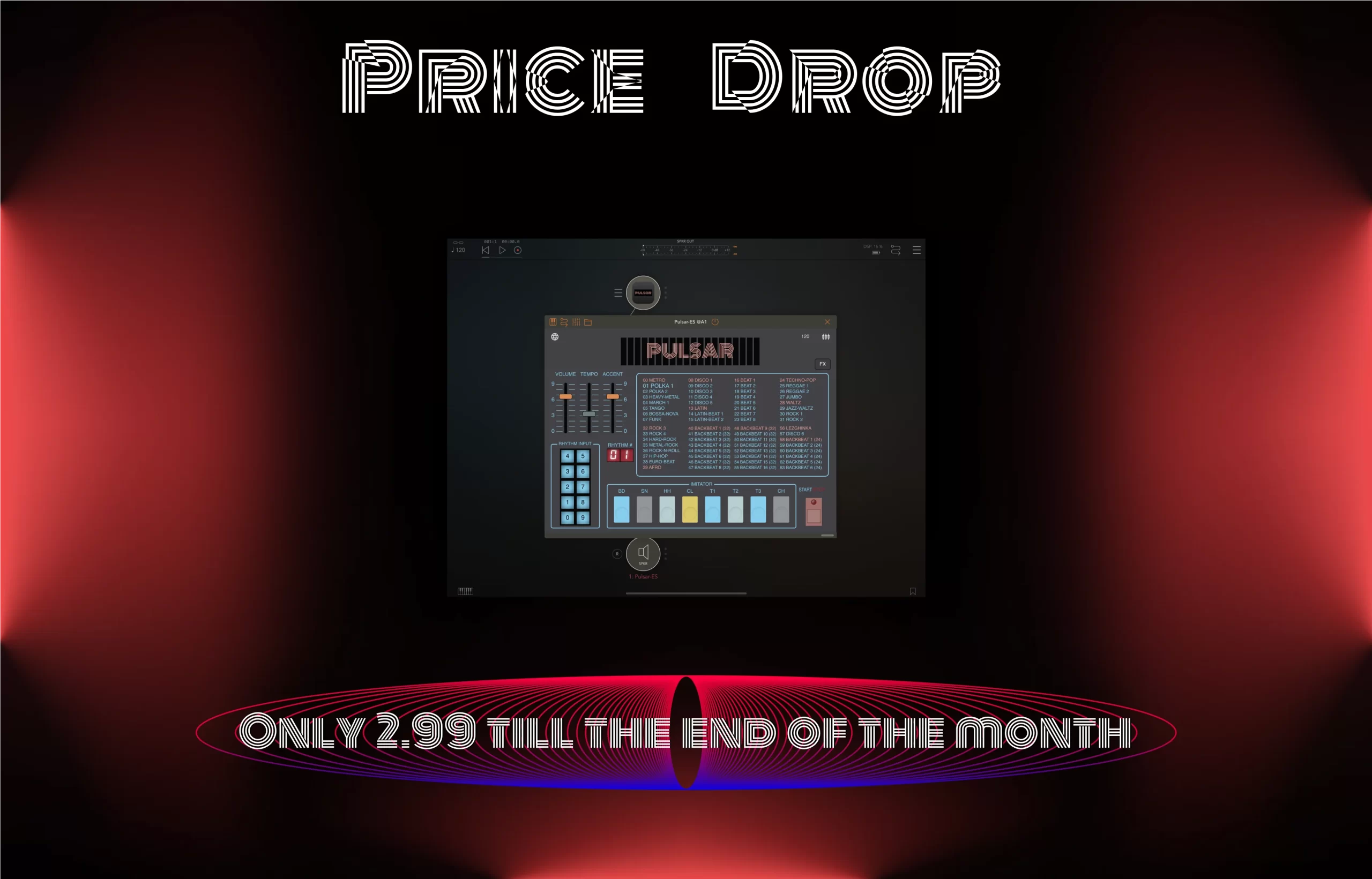
To replicate the original product, the design system of the Pulsar-ES was based on reproducing the dimensions of individual sections, the color palette, and the arrangement of modules of the original preset drum machine – Pulsar. At the same time, the remaining space was organized to incorporate additional effects(Drive, Reverb, Filter) into the classical functionality of the drum machine. Cyrillic font of the logo was modified to non-trivial Latin in accordance with all the requirements of visual and design thinking components. We carefully selected color schemes, typography, and graphical elements that reflect the retro aesthetics of analog drum machines while ensuring legibility and visual hierarchy.An important aspect was understanding the adaptability of the design to different screen sizes and application formats, namely AU, AUv3, VST resize for different devices (Mac, IPhone, IPad). Consistent branding elements like faders, knobs, buttons, and the logotype are incorporated to create a cohesive and recognizable identity for the digital replica.
Interface Design and Interaction:
The interaction design encompassed designing intuitive panels that contains Imitator/Rhythm Selector/FXs Pulsar Panel/Start-Stop button/Rhythm Indicator/Master Faders Section/Preset Patterns Library and Logotype that provide users with a sense of action control and familiarity. The header setting panel that gives you the ability to change tempo, language, connect to Ableton link and set up all other device settings was aimed to minimize cognitive load and streamline the access to various features and functionalities.
Iteration and Prototyping:
Main tool that we use is Figma because that tool enables seamless collaboration among team members, has an extensive ecosystem of plugins and allows us to create interactive and dynamic prototypes.The UI/UX design creation process of the iOS preset drum machine involved a few iterative cycles of refinement. We conducted usability tests, gathered feedback from beta testing and incorporated valuable insights into the design. This iterative approach helped us to identify pain points, improve usability, and enhance the overall user experience. Constant refinement ensured that the software replica not only captures the essence of analog drum machines but also addresses the specific needs and expectations of users in the mobile music production.
Conclusion:
Replicating an analog drum machine in a digital format requires a thoughtful and meticulous UI/UX design creation process(design of VST plugin and iOS AUV3 app). By researching and understanding the analog and digital domains, conceptualizing, wireframing, and creating visually appealing interfaces, you may bridge the analog-digital divide.The result is a software replica of preset drum machine that resonates with the soul of its analog counterpart, providing users with an immersive and delightful musical experience.